/**
     * 往Hash中存入数据
     *
     * @param key Redis键
     * @param hKey Hash键
     * @param value 值
     */
    public <T> void setCacheMapValue(final String key, final String hKey, final T value)
    {
        redisTemplate.opsForHash().put(key, hKey, value);
    }
    /**
     * 获取Hash中的数据
     *
     * @param key Redis键
     * @param hKey Hash键
     * @return Hash中的对象
     */
    public <T> T getCacheMapValue(final String key, final String hKey)
    {
        HashOperations<String, String, T> opsForHash = redisTemplate.opsForHash();
        return opsForHash.get(key, hKey);
    }
    /**
     * 获得缓存的Map
     *
     * @param key
     * @return
     */
    public <T> Map<String, T> getCacheMap(final String key)
    {
        return redisTemplate.opsForHash().entries(key);
    }
    /**
     * map自增
     * @param key
     * @param hKey
     * @param val
     * @return
     */
    public Long hashIncrement(final String key, final String hKey, Long val) {
        return redisTemplate.opsForHash().increment(key, hKey, val);
    }
1、 redis 存储 hashmap:
        Map<String,Integer> map = new HashMap<>();
        for(int i = 0; i < 100; i++) {
            map.put(i+"",i);
        }
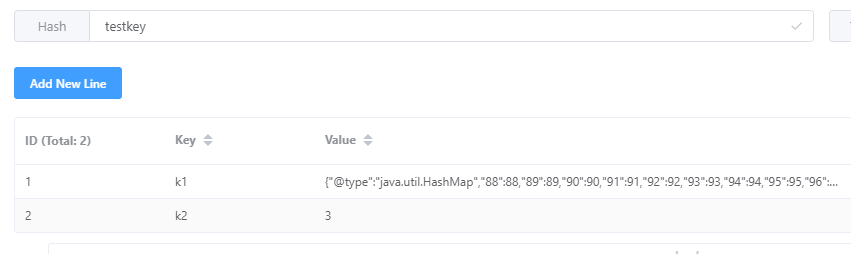
        redisService.setCacheMapValue("testkey","k1",map);
存储后获取值:
        Map<String,Integer> redRes = redisService.getCacheMapValue("testkey","k1");
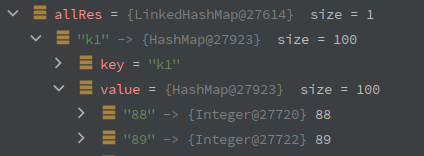
        Map<String,Map<String,Integer>> allRes = redisService.getCacheMap("testkey");